ACL Rehabilitation at Home in Delhi NCR
An ACL injury can make simple movements feel difficult. Walking, climbing stairs, getting out of a chair, turning quickly, or returning to sports can become challenging because the knee may feel painful, weak, stiff, or unstable. ACL rehabilitation helps you rebuild knee movement, muscle strength, balance, coordination, and confidence after an ACL injury or ACL surgery. At HealFast Physiotherapy, we provide personalized ACL rehabilitation at home in Delhi NCR, so you can work on your recovery in a familiar and comfortable environment. Your physiotherapist assesses your knee, understands your current movement and strength, and creates a rehabilitation plan based on your condition, activity level, surgery status, and medical instructions.
What Is an ACL Injury?
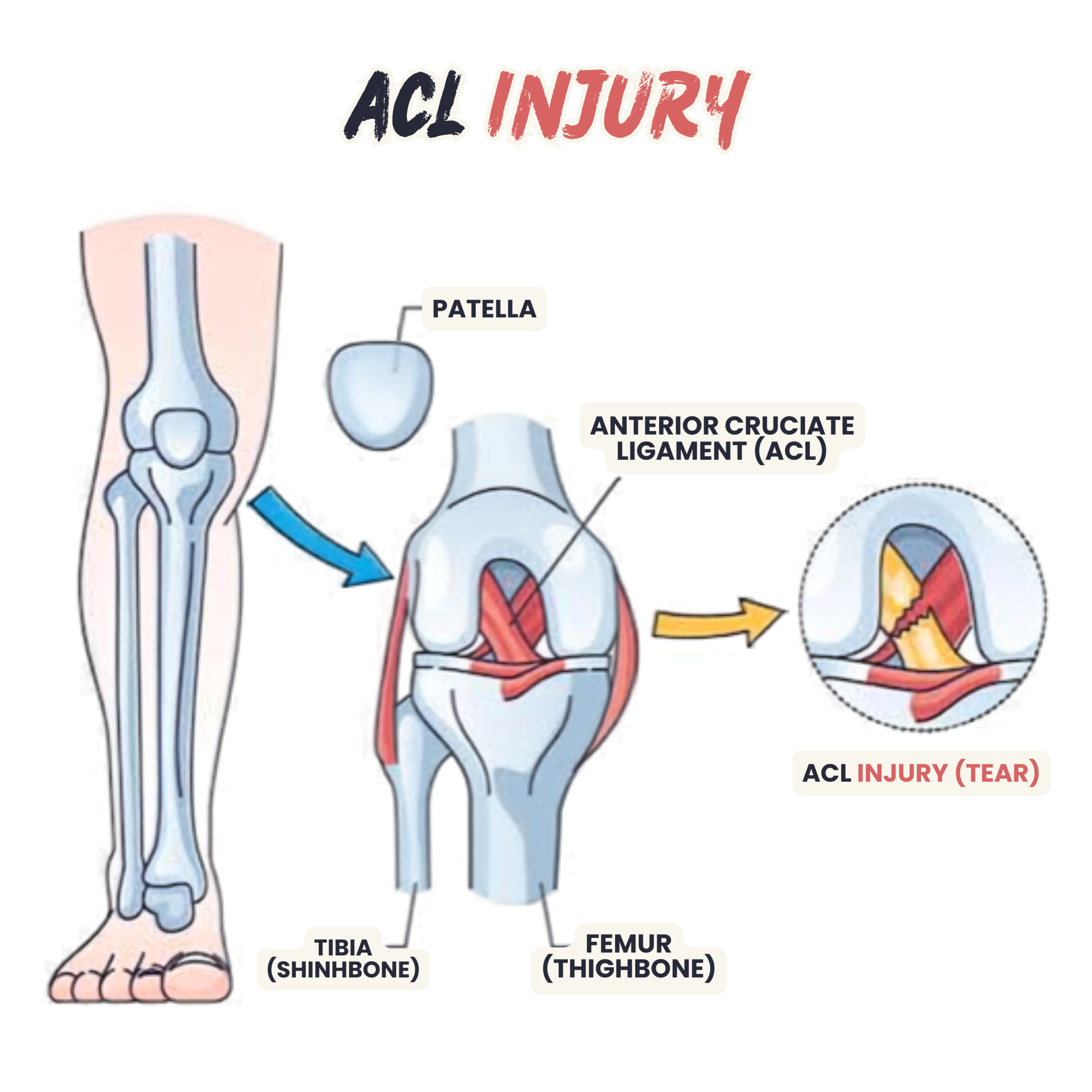
The anterior cruciate ligament (ACL) is one of the important ligaments inside the knee. It helps control the movement of the shin bone in relation to the thigh bone and contributes to knee stability during activities such as walking, running, jumping, landing, and changing direction. An ACL injury can happen when the knee suddenly twists, turns, or moves beyond its normal control. Sports such as football, basketball, badminton, cricket, tennis, and skiing can place higher demands on the knee, but an ACL injury can also occur during a fall or sudden movement.
An ACL injury does not affect every person in the same way. Some people experience swelling and pain soon after the injury. Others notice that the knee feels unstable, especially when they turn, walk on uneven ground, or change direction. Some people also develop weakness in the muscles around the knee because pain and reduced activity limit normal movement. A proper assessment helps determine which areas need attention during rehabilitation.
Why Is ACL Rehabilitation Important?
ACL rehabilitation focuses on more than reducing knee pain. The main goal involves helping you regain safe and useful movement. After an ACL injury, you may reduce your activity because the knee feels uncomfortable or unstable. This reduction can weaken the quadriceps, hamstrings, calf muscles, and hip muscles. The knee may also lose some flexibility, and your balance and movement control may change.
A structured ACL rehabilitation program gradually addresses these problems. Your physiotherapist may work on knee mobility first, then progress to strengthening, balance, coordination, walking control, and activity-specific exercises. If you had ACL surgery, your physiotherapist also follows the surgeon’s instructions and the stage of your rehabilitation. Each person progresses differently, so your program should match your symptoms, examination findings, surgical details, and functional goals.
Common Symptoms After an ACL Injury
An ACL injury can produce different symptoms depending on the severity and other structures involved. You may notice knee swelling, pain, stiffness, difficulty putting weight through the leg, reduced knee movement, muscle weakness, or a feeling that the knee may give way. Some people also feel less confident while walking or using stairs.
After ACL surgery, swelling and stiffness can also affect movement during the early stages. You may find it difficult to bend or straighten the knee fully. Your thigh muscles may feel weak, and you may need support while walking. Physiotherapy helps you work through these limitations in a controlled way while following the precautions given by your surgeon.
How Does Physiotherapy Help With ACL Rehabilitation?
Physiotherapy plays an important role in ACL rehabilitation because the knee needs more than rest to regain normal function. Your physiotherapist looks at knee movement, muscle strength, swelling, balance, walking pattern, and the way your leg handles different movements. The treatment then progresses according to your ability.
For example, a person who cannot fully straighten the knee may first need gentle mobility work and exercises that support comfortable movement. Once movement improves, the physiotherapist can introduce strengthening exercises. Later, the program may include single-leg control, balance activities, step exercises, controlled squats, and other functional movements. Athletes may eventually need more advanced exercises that match the demands of their sport, but your physiotherapist should introduce them at the appropriate stage.
ACL Rehabilitation for Knee Movement
Good knee movement provides an important foundation for rehabilitation. After an ACL injury or surgery, swelling and stiffness can limit how far you can bend or straighten your knee. Limited movement can also affect walking and everyday activities.
Your physiotherapist may use gentle exercises and movement techniques to help improve knee mobility. The exact exercises depend on your condition and rehabilitation stage. You should not force painful movement or perform advanced exercises simply because someone else with an ACL injury can do them. Your rehabilitation plan should match your own knee function and medical advice.
Improved knee movement can make everyday activities easier. You may gradually find it easier to sit on a chair, stand up, climb stairs, get into a car, or walk around your home.
ACL Rehabilitation for Muscle Strength
Muscle weakness often becomes an important part of ACL recovery. Reduced activity can weaken the quadriceps and other muscles around the hip and knee. After surgery, the thigh muscles can also lose strength quickly.
Your physiotherapist can introduce progressive strengthening exercises based on your rehabilitation stage. Early exercises may focus on activating the muscles around the knee and improving basic control. As your strength improves, your program may include exercises such as controlled sit-to-stand movements, supported squats, step exercises, resistance exercises, and single-leg strengthening.
The goal does not involve simply making the muscles stronger. You also need to learn how to use those muscles during real movements. Your physiotherapist therefore connects strengthening exercises with walking, stairs, balance, and functional activities.
ACL Rehabilitation for Balance and Stability
The knee works together with the ankle, hip, and other parts of the body to maintain balance. After an ACL injury, you may feel less stable on the affected leg. Fear of movement can also make you place more weight on the healthy leg.
Balance training helps you gradually improve control over the affected side. Your physiotherapist may begin with simple weight-shifting exercises and supported standing. As your control improves, you may progress to single-leg activities, controlled reaching, stepping, and other balance challenges.
Your physiotherapist adjusts the difficulty based on your ability. You should not start advanced balance exercises if your knee still feels unstable or your medical team has restricted certain movements.
ACL Rehabilitation for Walking
Walking can change after an ACL injury or surgery. You may limp, take shorter steps, avoid putting full weight through the affected leg, or depend heavily on the other side. These changes can place extra stress on other parts of the body.
Your physiotherapist can assess your walking pattern and guide you toward better movement control. The program may include weight-bearing practice, leg strengthening, balance training, and step control. If you use crutches or another walking aid, your physiotherapist can also guide you on safe use according to your medical instructions.
As your strength and control improve, your walking may become more comfortable and natural.
ACL Rehabilitation After ACL Surgery
Many people start physiotherapy after ACL reconstruction surgery. Rehabilitation after surgery requires careful progression because the knee and surrounding tissues need time to recover. Your surgeon may provide specific restrictions related to weight bearing, knee movement, exercise, or other activities.
At HealFast, our physiotherapist considers these instructions while creating your home rehabilitation plan. Early rehabilitation may focus on swelling management, comfortable knee movement, muscle activation, safe transfers, and walking. Later stages can focus more on strength, balance, coordination, functional movement, and activity-specific training.
The rehabilitation process does not follow one fixed timetable for everyone. Your progress depends on factors such as the surgical procedure, additional knee injuries, strength, movement, swelling, activity level, and medical guidance.
ACL Rehabilitation After a Sports Injury
Athletes often want to return to running, jumping, changing direction, or playing their sport after an ACL injury. Returning to sport requires more than feeling less pain. Your knee needs enough strength, control, balance, and movement capacity to handle the demands of the activity.
A physiotherapist can gradually introduce sport-related movements when appropriate. The program may eventually include controlled landing exercises, direction changes, running progressions, jumping activities, and other drills that match the sport. Your physiotherapist should introduce these exercises according to your rehabilitation stage and medical clearance.
For example, a badminton player may eventually need to work on quick changes of direction and controlled lunges. A football player may need running, acceleration, deceleration, jumping, and direction-change training. The exercises should progress gradually rather than moving directly from basic rehabilitation to full sports activity.
ACL Rehabilitation for Stiffness and Swelling
Swelling can limit knee movement and make exercise more difficult. Your physiotherapist can assess swelling and movement during your sessions and modify your exercise program when needed.
You may receive guidance on positioning, gentle movement, muscle activation, and appropriate exercise levels. Your physiotherapist can also explain how to manage your activity between sessions. If swelling suddenly increases, pain becomes severe, or you notice another concerning symptom, you should contact your doctor or surgical team.
ACL Rehabilitation and Functional Training
The final goal of rehabilitation involves returning to useful everyday movement. Exercises should therefore connect with the activities you actually need to perform.
You may need to stand from a chair, climb stairs, walk through a market, get into a car, carry light objects, walk outdoors, or return to exercise. Your physiotherapist can use functional exercises to help you practise these movements safely.
Functional training also helps you understand how your knee responds to different tasks. Instead of only exercising while lying down or sitting, you gradually learn to control your leg during standing and moving activities.
ACL Rehabilitation at Home in Delhi NCR
Home physiotherapy can make ACL rehabilitation more convenient, especially during the early recovery period when travelling to a clinic feels difficult. A physiotherapist can visit your home and conduct the session in a safe area with enough space for movement exercises.
A home session can also make it easier to connect rehabilitation with your daily environment. For example, your physiotherapist can observe how you use stairs, stand from your chair, walk through your home, or move around your bedroom and bathroom. The therapist can then suggest practical ways to make these movements safer and more comfortable.
HealFast Physiotherapy provides home physiotherapy services across Delhi NCR, with treatment plans designed around the patient’s condition and functional needs.
What Happens During an ACL Physiotherapy Session?
Your first session usually starts with an assessment. The physiotherapist asks about your injury, symptoms, previous treatment, surgery if applicable, current activity level, and daily difficulties. If you have undergone ACL surgery, you should share your surgical and medical instructions with the physiotherapist.
The physiotherapist may then assess knee movement, swelling, muscle strength, balance, walking, and functional movement. Based on the findings, the physiotherapist creates a treatment plan.
During later sessions, the physiotherapist reviews your progress and adjusts the exercises. If an exercise becomes easy, the therapist may increase the challenge. If your knee reacts poorly, the therapist may reduce the intensity or modify the movement.
ACL Rehabilitation Exercises
ACL rehabilitation exercises change throughout the recovery process. Early exercises may focus on gentle knee movement and muscle activation. Later exercises may include strengthening and balance work. Advanced rehabilitation can include functional and sport-specific movements when appropriate.
Common exercise categories can include knee mobility exercises, quadriceps activation, hamstring strengthening, hip strengthening, calf strengthening, controlled squats, step exercises, balance training, single-leg control, and movement coordination.
You should not copy an ACL exercise program from the internet and assume it fits your condition. Your rehabilitation stage, surgery details, associated injuries, strength, pain, swelling, and medical restrictions can all affect exercise selection.
Can ACL Rehabilitation Help With Knee Confidence?
An ACL injury can affect more than physical strength. You may feel nervous when putting weight on the injured leg or changing direction. You may avoid stairs, running, jumping, or sports because you worry that your knee will not support you.
A gradual rehabilitation program gives you opportunities to practise movement in a controlled environment. As your strength, balance, and movement control improve, you can gradually work toward the activities that matter to you. Your physiotherapist can guide the progression and help you understand which movements you can practise at each stage.
ACL Rehabilitation for Older Adults
ACL injuries can also affect older adults, particularly after falls, twisting movements, or other knee injuries. Rehabilitation for an older adult may focus strongly on walking, strength, balance, confidence, and daily activities.
A home-based approach can provide additional convenience when travelling is difficult. The physiotherapist can adapt exercises to the person’s strength, balance, home environment, and daily routine.
How Long Does ACL Rehabilitation Take?
There is no single recovery time that applies to every ACL injury. Rehabilitation duration depends on whether you had surgery, the type of injury, other damaged knee structures, your strength and mobility, your activity level, and your doctor’s instructions.
Instead of focusing only on a specific number of weeks, rehabilitation should focus on meaningful progress. Your physiotherapist can track improvements in knee movement, strength, balance, walking, functional tasks, and activity tolerance. Your medical team can also guide decisions about returning to running, sports, or other demanding activities.
How Can You Support ACL Rehabilitation at Home?
Your daily habits can influence your rehabilitation. Follow your physiotherapist’s exercise instructions and avoid adding advanced exercises without guidance. Give your knee enough recovery time and follow the weight-bearing or movement restrictions provided by your surgeon.
Keep your exercise area clear so you can move safely. Wear suitable footwear during exercises when your physiotherapist recommends it. If you experience a significant increase in swelling or pain after an activity, tell your physiotherapist rather than simply pushing through it.
Consistency matters. A short, appropriate exercise routine performed regularly can support progress better than occasional sessions with excessive effort.
When Should You Contact a Doctor After an ACL Injury?
Physiotherapy supports rehabilitation, but some symptoms require medical assessment. Seek medical attention if you experience severe or rapidly increasing pain, major swelling, a new injury, significant loss of movement, inability to bear weight when you previously could, fever with concerning symptoms, unusual redness or warmth around a surgical wound, or other symptoms that worry you.
After surgery, follow your surgeon’s specific instructions. Contact your surgical team if you notice symptoms that fall outside the expected recovery process or if you have concerns about the surgical wound, swelling, pain, or movement.
Why Choose HealFast for ACL Rehabilitation at Home?
HealFast Physiotherapy provides personalized home physiotherapy for people who need support with movement, strength, balance, and functional recovery. Our ACL rehabilitation at home in Delhi NCR focuses on your current ability rather than using the same exercise plan for everyone.
Your physiotherapist can assess your knee, understand your daily challenges, guide your exercises, and gradually progress your rehabilitation as your function improves. Home sessions can also make rehabilitation more convenient when walking or travelling feels difficult after an injury or surgery.
Whether you need help after an ACL injury, ACL reconstruction, or a sports-related knee problem, the rehabilitation plan should match your medical condition and personal goals.
Frequently Asked Questions About ACL Rehabilitation
What is ACL rehabilitation?
ACL rehabilitation is a structured physiotherapy process that helps improve knee movement, strength, balance, coordination, walking, and functional ability after an ACL injury or surgery. The rehabilitation program changes as your knee improves.
Can physiotherapy help after ACL surgery?
Yes. Physiotherapy commonly forms an important part of recovery after ACL reconstruction. Your physiotherapist can work on movement, muscle activation, strength, balance, walking, and functional activities while following your surgeon’s instructions.
Can I get ACL rehabilitation at home?
Yes. HealFast provides ACL rehabilitation physiotherapy at home in Delhi NCR. A physiotherapist can visit your home and guide you through an individualized rehabilitation program.
When should ACL physiotherapy start?
The timing depends on the injury, treatment, surgery, medical instructions, and your current condition. After ACL surgery, follow the rehabilitation instructions provided by your surgeon and physiotherapist.
Can ACL physiotherapy help improve knee strength?
A progressive physiotherapy program can help improve strength in the quadriceps, hamstrings, calf, hip, and other muscles involved in lower-limb movement. Your physiotherapist chooses exercises based on your rehabilitation stage.
Can physiotherapy help me return to sports after an ACL injury?
Physiotherapy can support the physical preparation required for returning to sport. The program may gradually include strength, balance, running, jumping, landing, and direction-change activities when appropriate. Your healthcare team should guide your return-to-sport decision.
Can I exercise at home after ACL surgery?
Your physiotherapist may provide a home exercise program that matches your rehabilitation stage. Do not add advanced exercises without professional guidance because the correct exercise and intensity depend on your surgery, healing stage, and medical restrictions.
How long does ACL rehabilitation take?
The duration varies from person to person. Your recovery can depend on the injury, surgery, additional injuries, strength, mobility, activity level, and rehabilitation progress. Your physiotherapist can monitor your progress and adjust your program accordingly.
Start Your ACL Rehabilitation at Home in Delhi NCR
Recovering from an ACL injury takes patience, regular rehabilitation, and gradual progression. The right physiotherapy program can help you work on knee movement, muscle strength, balance, walking, coordination, and functional activities according to your condition.
If travelling to a clinic feels difficult after an injury or surgery, HealFast Physiotherapy can bring personalized ACL rehabilitation to your home in Delhi NCR.
Book an ACL physiotherapy assessment at home today.
📞 Call: +91 84487 77406
🏠 Home Physiotherapy in Delhi NCR