Gait Training at Home in Delhi NCR
Gait Training at Home in Delhi NCR, Walking is one of the most important movements we use every day. We walk to the bathroom, move around the house, climb stairs, go to work, visit a shop, and spend time with family and friends. When walking becomes difficult, simple activities can suddenly require much more effort. You may walk slowly, take shorter steps, feel unsteady, drag one foot, depend on a wall or family member, or avoid walking because you fear falling. Gait training can help people practice walking in a safe and structured way while working on the physical problems that affect their walking pattern.
At HealFast Physiotherapy, Gait Training at Home in Delhi NCR focuses on your individual walking needs. A physiotherapist first checks how you stand, walk, turn, step, shift your weight, and control your legs. The therapist may also assess muscle strength, joint movement, balance, coordination, posture, foot position, and walking speed. Based on the assessment, the therapist creates a progressive program that may include walking practice, strengthening, balance exercises, coordination training, mobility work, step training, and functional activities. The program can support people recovering from stroke, injury, surgery, neurological conditions, long periods of inactivity, or other problems that affect walking.
What Is Gait Training?
Gait training means practicing walking with a clear rehabilitation goal. The word gait simply means the way a person walks. A physiotherapist looks at different parts of your walking pattern to understand what makes walking difficult.
Walking involves much more than moving one foot in front of the other. Your brain needs to plan the movement, your eyes provide information about the path ahead, your muscles produce and control force, your joints need enough movement, your feet need to support your body, and your balance system helps you stay upright while your weight moves from one leg to the other.
When one part of this system changes, walking can also change. For example, weak leg muscles may make it difficult to lift the body during a step. Limited ankle movement may affect how the foot contacts the floor. Poor balance may make you take very small steps because you do not feel confident. Pain may cause you to avoid putting weight on one leg.
Gait training helps you practice the parts of walking that need improvement. The therapist does not simply ask you to walk more. They identify the movement problem and choose exercises that address it. Gait Training at Home in Delhi NCR
Why Can Walking Become Difficult?
Walking problems can develop for many reasons. An injury can cause pain, weakness, or stiffness. Surgery can temporarily reduce strength and confidence. A stroke can affect movement on one side of the body. Neurological conditions can affect muscle control and coordination. Long periods of bed rest can also reduce strength and walking ability.
Older adults may experience changes in strength, balance, reaction speed, vision, or joint movement. These changes can make walking less stable. Some people also reduce their activity because they worry about falling. Less activity can then lead to further weakness.
Foot and ankle problems can also affect gait. Painful feet, reduced ankle movement, muscle weakness, or poor control can change the way you place your foot on the ground.
The first step should always involve understanding the reason for the walking problem. A physiotherapist can assess your movement and decide whether gait training is appropriate or whether you need further medical assessment. Gait Training at Home in Delhi NCR.
What Does a Normal Walking Pattern Involve?
Walking has several stages. One foot stays on the ground while the other moves forward. Your body shifts weight from one leg to the other. The leg that moves forward needs enough control to place the foot safely. The leg that supports your body needs enough strength and stability.
Your arms and trunk also contribute to walking. Your arms usually move in coordination with your legs. Yourself trunk adjusts as your weight moves from side to side. Your head and eyes help you understand where you are going.
A physiotherapist may look at step length, walking speed, foot placement, weight transfer, posture, balance, and the way your legs move. The therapist may also check how you turn or stop because these movements can become difficult when balance or coordination is reduced.
Gait Training After a Stroke
A stroke can affect strength, coordination, balance, sensation, and movement control. Some people develop weakness on one side of the body. Others may have difficulty placing the foot correctly, controlling the knee, or shifting weight from one leg to the other.
Gait training can form an important part of stroke rehabilitation. The physiotherapist may begin with basic movement and weight-shifting exercises before progressing to supported walking. The therapist may work on standing control, stepping, foot placement, walking speed, turning, and endurance.
For example, a person who cannot stand safely may first work on sitting balance and transfers. Once standing becomes safer, the therapist may introduce weight shifting and supported stepping. Later, the person may practice walking with a suitable walking aid. As control improves, the therapist can gradually change the level of support.
The exact program depends on the person’s abilities and medical condition. Stroke rehabilitation should always follow appropriate medical guidance. Gait Training at Home in Delhi NCR.
Gait Training for Paralysis
Paralysis can affect movement, strength, sensation, balance, and walking. The effect depends on the cause and the part of the nervous system involved.
A person with one-sided weakness may struggle to place one foot correctly or support weight on one leg. Another person may need help with both legs or may have a different walking challenge.
Gait training can focus on safe standing, weight shifting, stepping, walking with support, and improving movement control. The therapist may also work on strength, balance, coordination, and transfers because these skills support walking.
The goal should match the person’s current ability. Some people may work toward independent walking, while others may focus on safer supported walking and better movement during daily activities.
Gait Training After an Injury
An injury can change the way you walk even after the main pain starts to improve. You may continue to protect the injured area without realizing it. For example, after an ankle injury, you may place less weight on that foot. After a knee injury, you may bend the knee less during walking.
These changes can affect other parts of the body. You may place more load on the other leg or change the way your hip and trunk move.
Physiotherapy can help you gradually restore a more comfortable and controlled walking pattern. The program may include strength exercises, joint mobility work, balance training, step practice, and walking drills.
The therapist can also help you understand when to increase walking time and when to reduce activity. This matters because returning to too much walking too soon can increase symptoms in some injuries.
Gait Training After Knee Surgery
Knee surgery can temporarily affect walking. Pain, swelling, weakness, stiffness, and fear of putting weight through the leg can all change your gait.
After surgery, your surgeon may give you specific instructions about weight-bearing, movement, and activity. Your physiotherapist should follow these instructions when planning gait training.
Early rehabilitation may focus on safe transfers, standing, weight shifting, and controlled walking. Later stages may include stair practice, strengthening, balance exercises, and longer walking periods.
For example, after knee replacement surgery, a person may initially use a walker or another suitable aid. As strength and balance improve, the therapist can assess whether the person can safely reduce their reliance on the aid.
Gait Training After Hip Surgery
Hip surgery can affect walking, balance, strength, and confidence. Some patients also have specific movement precautions during the early recovery period.
Your physiotherapist can teach you how to stand, transfer, and walk while following your surgeon’s instructions. The program may include hip and leg strengthening, balance training, walking practice, and functional exercises.
As recovery progresses, the therapist can gradually increase walking distance and reduce support when appropriate. Do not stop using a walking aid simply because you feel better. Your physiotherapist should assess whether you can walk safely without it.
Gait Training After an Ankle Injury
The ankle helps your body adjust to the ground during walking. When the ankle becomes painful or weak, your walking pattern can change.
After an ankle sprain, you may avoid putting weight on the injured side. You may also take shorter steps or walk with a limp. Even after pain improves, your balance and ankle control may still need work.
Gait training can include walking practice, ankle movement, calf strengthening, balance exercises, weight shifting, and step training. The therapist can gradually increase the challenge as your ankle becomes stronger and more stable.
Gait Training for Older Adults
Older adults may experience changes in walking speed, step length, strength, balance, and reaction time. Some people also develop a fear of falling.
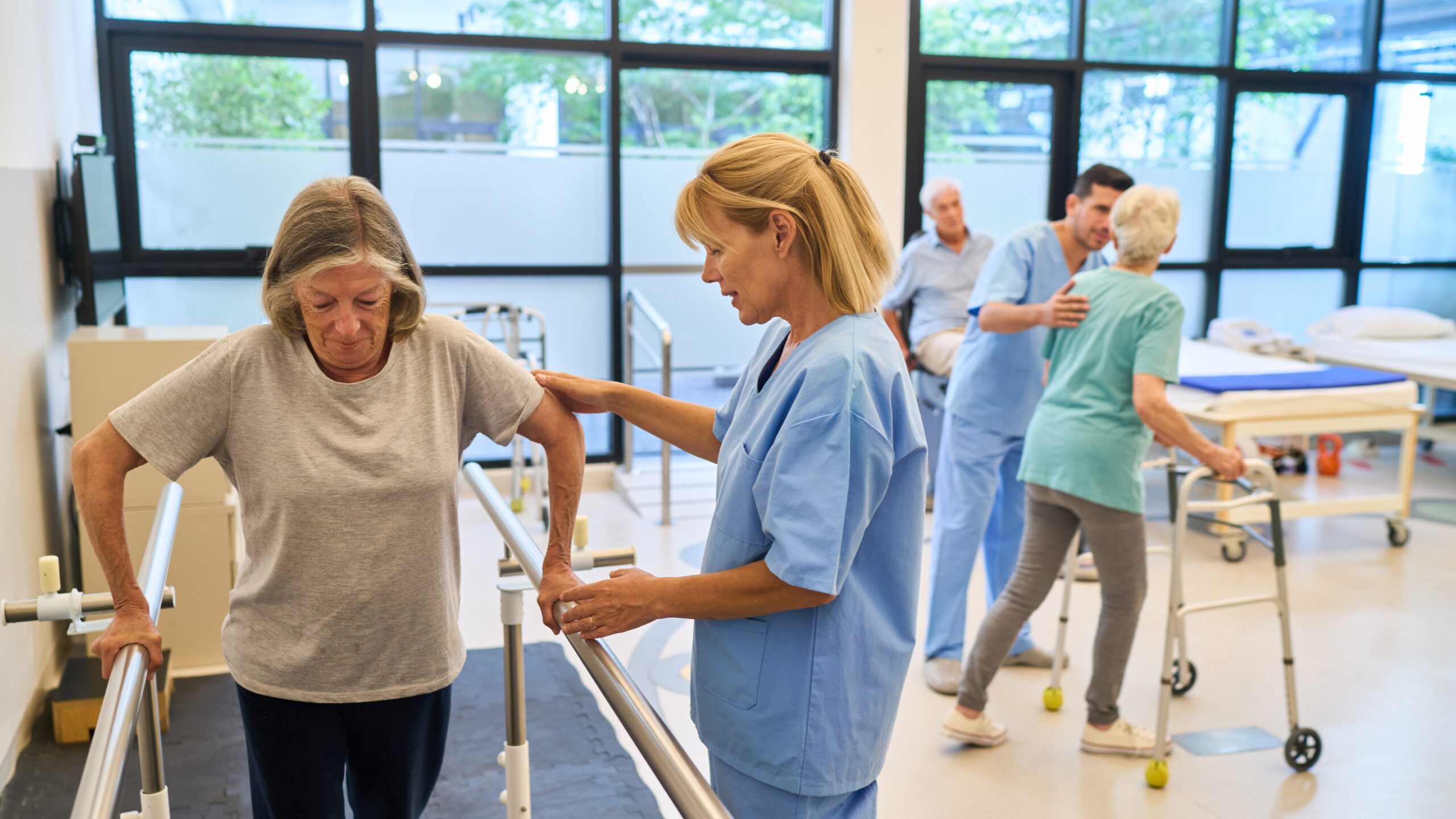
Gait training can help an older adult practice walking in a controlled environment. The therapist may work on standing from a chair, walking across a room, turning, stepping over small obstacles, and climbing stairs.
Strength and balance training often form an important part of the program. Stronger legs can help with standing and walking. Better balance can help a person control their body while changing direction.
The program should always match the person’s health and ability. Some older adults may need close supervision or support during training.
Gait Training for People With Balance Problems
Balance and walking are closely connected. Every step requires you to shift your weight and control your body.
If you have poor balance, you may walk with shorter steps or keep your feet farther apart. You may also hold onto furniture or avoid walking outside.
A physiotherapist can work on the balance skills that support walking. Training may include weight shifting, stepping in different directions, standing balance, walking while turning, and controlled changes in speed.
The therapist can progress the exercises gradually. The goal is to challenge your balance without creating unnecessary fall risk.
Gait Training for Muscle Weakness
Strong muscles help you control your body during walking. Weakness in the hips, thighs, calves, feet, or trunk can change your gait.
For example, weak hip muscles may make it harder to control the pelvis while walking. Weak calf muscles may affect how you push the body forward. Weak thigh muscles can make stairs and standing from a chair more difficult.
A gait program may therefore include strengthening exercises alongside walking practice. The therapist can choose exercises based on the specific muscles and movements that need attention.
Gait Training for Foot Drop
Foot drop can make it difficult to lift the front part of the foot while walking. The foot may drag or the person may lift the knee higher than usual to clear the ground.
Foot drop can have several causes, including nerve problems, neurological conditions, and other medical issues. A proper assessment is important because treatment depends on the cause.
A physiotherapist may work on walking technique, leg strength, balance, and safe foot placement. In some cases, a doctor or specialist may recommend an appropriate brace or other support.
Gait Training for Neurological Conditions
Neurological conditions can affect walking in different ways. They may change strength, muscle tone, coordination, sensation, balance, or movement timing.
Conditions such as Parkinson’s disease, multiple sclerosis, stroke, brain injury, and spinal cord conditions can affect gait. Each condition needs an individual approach.
The therapist may work on step length, walking speed, turning, balance, coordination, and functional movement. Some people may also benefit from external cues or structured walking practice.
The treatment should match the person’s symptoms and medical plan. The physiotherapist can also communicate with other healthcare professionals when the rehabilitation program needs wider support.
Gait Training for Parkinson’s Disease
Parkinson’s disease can affect walking, movement speed, balance, and turning. Some people develop shorter steps or find it difficult to start walking or change direction.
Physiotherapy may include walking practice, large movement exercises, balance training, turning practice, and strategies that help the person focus on each step.
The therapist can also work on strength and functional activities. A safe home environment can support regular practice.
If walking suddenly changes or symptoms change quickly, the person should discuss the change with their doctor.
Gait Training for Children
Children may need gait training for different reasons. Developmental conditions, neurological problems, muscle weakness, orthopedic issues, injury, and surgery can all affect walking.
Pediatric gait training should remain age-appropriate and engaging. The therapist may use games, stepping activities, obstacle courses, reaching tasks, and other activities to encourage controlled movement.
Parents can also learn safe exercises and activities to practice at home. The therapist can explain how much help the child needs and how to provide support without taking over the movement.
Gait Training for Sports and Athletes
Athletes need more than basic walking skills. They need controlled running, acceleration, stopping, jumping, landing, and changes of direction.
After an injury, an athlete may return to walking before returning to running. Gait training can help rebuild basic movement before the athlete moves toward more demanding activities.
For example, a football player recovering from a knee injury may first work on walking and leg strength. Later, the program may include jogging, acceleration, cutting, jumping, and sport-specific drills when appropriate.
The therapist should increase training load gradually. Returning to sport should depend on the injury, strength, movement control, and medical guidance.
Gait Training for Balance and Coordination
Walking requires constant coordination. Your legs, arms, trunk, eyes, and nervous system work together with every step.
Coordination problems may cause inaccurate foot placement, uneven steps, difficulty turning, or trouble changing direction. The therapist can use specific drills to practice these movements.
Training may include stepping forward, backward, and sideways. It may also include turning, stopping, starting, obstacle walking, and controlled changes in walking speed.
These exercises help connect balance and coordination with real walking tasks.
Gait Training With Walking Aids
Some people need a walking aid during rehabilitation. Common aids include walkers, walking frames, canes, and crutches.
A walking aid can provide extra support while you rebuild strength and balance. However, you need to use the correct aid and use it correctly.
A physiotherapist can assess your walking and guide you on the appropriate use of an aid. The therapist can also check whether the height and technique are suitable.
You should not stop using an aid simply because you want to become independent quickly. Safe progression matters more than rushing the process.
Can Gait Training Improve Walking Speed?
Walking speed can change for many reasons. Pain, weakness, balance problems, neurological conditions, and fear of falling can all make a person walk more slowly.
A physiotherapist may include walking-speed practice when appropriate. The therapist can work on step length, strength, balance, and confidence first. Once these areas improve, the person may practice walking at different speeds.
Walking faster should not become the only goal. A safe and controlled walking pattern matters too.
Gait Training and Stair Practice
Stairs require more strength and balance than level walking. You need enough leg strength to lift your body and enough control to lower yourself safely.
People recovering from surgery or injury may find stairs difficult at first. A physiotherapist can teach you how to approach stairs safely and how to use a railing or walking aid when needed.
Training may start with a single step or supported practice. As your strength and control improve, the therapist can progress to more steps.
Gait Training for Getting In and Out of a Chair
Walking does not begin when your foot moves forward. You first need to stand safely.
The sit-to-stand movement requires leg strength, trunk control, balance, and coordination. A person who struggles with this movement may also find walking difficult.
Physiotherapy can therefore include repeated sit-to-stand practice. The therapist can adjust the chair height, use support, and progress the exercise as strength improves.
Gait Training for Turning and Changing Direction
Many people can walk straight but struggle when they need to turn. Turning requires your body to shift weight and coordinate several movements at once.
A therapist may practice small turns first. Later, the person may work on larger turns, changing direction while walking, and moving around obstacles.
This training can be especially useful for people recovering from stroke or neurological conditions, as well as older adults with balance concerns.
Gait Training at Home in Delhi NCR
Home gait training can be useful when travelling to a clinic is difficult or when the person’s walking problem affects everyday activities at home.
A physiotherapist can observe how you move around your actual environment. This may include walking from the bedroom to the bathroom, getting up from a chair, using stairs, or moving through narrow spaces.
The therapist can then make the training practical. For example, if you struggle with the stairs at home, the therapist can work on stair-related skills. If you struggle to get up from a chair, the therapist can include sit-to-stand practice.
Home treatment also allows family members or caregivers to learn how to provide safe support when appropriate.
What Happens During the First Gait Training Session?
The first session starts with an assessment. Your physiotherapist asks about your walking problem, medical history, previous injuries or surgery, falls, pain, activity level, and daily goals.
The therapist then observes your walking. They may check your posture, step length, walking speed, foot placement, balance, weight transfer, and use of any walking aid.
The therapist may also assess strength, joint movement, coordination, and functional tasks such as standing from a chair or climbing a step.
After the assessment, the therapist creates a treatment plan. The plan may include gait training along with strengthening, balance work, mobility exercises, and other rehabilitation techniques.
How Long Does Gait Training Take?
There is no fixed recovery time for gait training. The time needed depends on the cause of the walking problem, your health, strength, balance, neurological function, age, activity level, and rehabilitation goals.
Someone recovering from a minor injury may need a shorter rehabilitation program. A person recovering from stroke or a major neurological condition may need longer-term rehabilitation.
Your physiotherapist can monitor your progress and adjust the program over time. Progress may include safer walking, better balance, improved endurance, better foot control, or greater independence in daily activities.
How Often Should You Practice Walking?
Practice frequency depends on your condition and safety. Some people may benefit from short periods of walking practice several times during the day. Others may need more rest between sessions.
Your physiotherapist can tell you how much practice suits your current stage. The goal is to give your body enough practice without creating excessive fatigue or worsening symptoms.
Regular practice can help reinforce movement skills. However, more is not always better. Recovery and rest also matter.
Can Gait Training Be Done Every Day?
Some forms of walking practice may form part of a daily home program. However, the right amount depends on your condition.
A person with severe weakness or fatigue may need more rest. Someone with a minor injury may tolerate more walking.
Follow the program given by your physiotherapist and pay attention to your symptoms. If your walking becomes much worse, pain increases significantly, or you develop unusual symptoms, discuss them with your healthcare professional.
Is Gait Training Safe?
Gait training can be safe when the therapist chooses exercises that match your ability and provides suitable support. However, walking practice can increase fall risk in people with significant balance or weakness problems.
Your physiotherapist can use a walker, cane, railing, caregiver support, or other suitable assistance when needed. The therapist can also choose a safe area for practice.
Do not attempt advanced walking exercises alone if you have a high risk of falling.
When Should You Seek Medical Attention?
Some walking problems need urgent medical assessment. Seek urgent help if walking suddenly becomes difficult or if you develop sudden weakness, facial drooping, difficulty speaking, sudden vision changes, severe dizziness, loss of consciousness, or another sudden neurological symptom.
You should also seek medical care after a serious fall or injury, especially if you cannot put weight on a limb or have severe pain.
For gradual walking problems, a physiotherapy assessment can help identify movement limitations and determine whether rehabilitation is appropriate.
Why Choose HealFast for Gait Training?
HealFast Physiotherapy provides personalized home-based physiotherapy for people who need help with walking, balance, strength, coordination, and functional movement.
The therapist does not use the same gait program for everyone. Your treatment starts with an assessment of your walking pattern and physical needs. The program may then combine gait training with balance exercises, strength training, mobility work, coordination training, and functional rehabilitation.
Home sessions can also make treatment more practical because the therapist can work with your real environment. If stairs, chairs, narrow spaces, or other parts of your home affect your movement, the therapist can include those challenges in your rehabilitation plan when it is safe to do so.
If you are looking for Gait Training at home in Delhi NCR, contact HealFast Physiotherapy at +91 84487 77406 to discuss your needs and arrange an assessment.
Frequently Asked Questions
What is gait training in physiotherapy?
Gait training is a form of rehabilitation that focuses on improving walking. It can include walking practice, balance training, strength exercises, coordination work, mobility exercises, and functional movement.
Who needs gait training?
People with walking difficulties after stroke, injury, surgery, neurological conditions, prolonged inactivity, or other movement problems may benefit from gait training.
Can gait training help after a stroke?
Yes. Gait training can form part of stroke rehabilitation. The therapist may work on standing, weight shifting, stepping, balance, walking, turning, and endurance.
Can I get gait training at home?
Yes. Home gait training can work well when the home environment is suitable and safe. The physiotherapist can adapt exercises to your available space and daily activities.
Can gait training help older adults?
Gait training can help older adults work on walking, balance, strength, stepping, turning, and confidence. The program should match the person’s physical ability and health needs.
Can gait training help after knee surgery?
It can form part of post-surgical rehabilitation when your surgeon allows walking and exercise. The therapist can work on weight bearing, walking technique, strength, balance, and functional movement.
Can gait training help after an ankle injury?
Yes. Rehabilitation may include walking practice, ankle movement, strength training, balance work, and step training as your recovery progresses.
Do I need a walker during gait training?
Not everyone needs a walker. A physiotherapist can assess your balance and strength and determine whether a walking aid would provide useful support.
Can gait training improve walking speed?
It may help improve walking ability and speed in some people. The therapist should also focus on safety, balance, strength, and movement control rather than speed alone.
How long does gait training take?
The duration varies. It depends on the cause of the walking problem, your physical condition, rehabilitation goals, and progress.
Can gait training help with balance problems?
Yes. Balance training often forms part of gait rehabilitation because walking requires repeated weight shifting and body control.
Can children receive gait training?
Yes. Pediatric physiotherapists can use age-appropriate walking, balance, coordination, and strengthening activities to support children with movement difficulties.
Can athletes receive gait training?
Yes. Athletes may use gait and movement training during rehabilitation before progressing to running, jumping, changing direction, and sport-specific activity.
What should I do if I feel unsafe while walking?
Stop and move to a safe position. Use your prescribed walking aid or support if needed. Tell your physiotherapist about the problem so they can reassess your walking and modify the program.
Start Gait Training at Home in Delhi NCR
Walking problems can affect much more than walking itself. They can make it harder to use stairs, get out of a chair, move around the home, go outside, work, exercise, or take part in family activities. Gait training focuses on the physical skills that support safe and useful walking.
At HealFast Physiotherapy, the program starts with a detailed assessment. Your physiotherapist then creates a plan based on your walking pattern, strength, balance, coordination, mobility, health, and daily goals. The program can progress gradually as your ability improves.
If you need Gait Training at Home in Delhi NCR, contact HealFast Physiotherapy at +91 84487 77406 to arrange an assessment.