Dry Needling at Home in Delhi NCR
Dry Needling at Home in Delhi NCR, Dry needling is a physiotherapy technique that uses a very thin, sterile needle to work on selected muscles and soft tissues. A trained physiotherapist uses the needle after checking your pain, movement, muscle tightness, strength, and daily activities. The needle does not contain medicine. Instead, the physiotherapist uses it as one part of a treatment plan for certain muscle and movement problems. Dry needling may help some people with muscle pain, muscle tightness, neck pain, shoulder pain, back pain, and sports-related problems. It does not suit every person, so a proper assessment should come first. At HealFast Physiotherapy, your physiotherapist checks your condition before using dry needling. If the technique suits you, the therapist may combine it with simple exercises, stretching, mobility work, manual therapy, and strength training. This approach helps you work on the main problem instead of relying on one treatment alone.
What Is Dry Needling?
Dry needling uses a very thin needle to reach a selected area of muscle or soft tissue. A trained physiotherapist chooses the treatment area after checking your symptoms and movement. The needle does not inject medicine. This makes dry needling different from a normal injection. Your therapist may use the needle on a tight or painful muscle when the assessment shows that it may help.
For example, you may have tight muscles around your neck that make it hard to turn your head. You may have shoulder pain that makes it hard to reach above your head. You may also have a tight muscle after a sports injury. In some cases, your physiotherapist may use dry needling as part of your treatment. The therapist may then guide you through simple movements or exercises. These exercises help you use the treated area and work on strength and movement.
Why Do Physiotherapists Use Dry Needling?
Pain can change the way you move. When a muscle hurts, you may use it less. You may also start using another part of your body more. Over time, this can affect your movement and daily activities.
Dry needling may help some people with muscle pain or tightness. It may also help make movement more comfortable for some patients. Your response can depend on the cause of your pain, your physical condition, and the other treatments you receive.
Your physiotherapist will not look only at the painful area. The therapist will check how the nearby joints and muscles work together. For example, shoulder pain may also involve the neck or upper back. Back pain may also involve the hips and legs. This full check helps your physiotherapist decide whether dry needling makes sense for your treatment. Dry Needling at Home in Delhi NCR.
How Does Dry Needling Work?
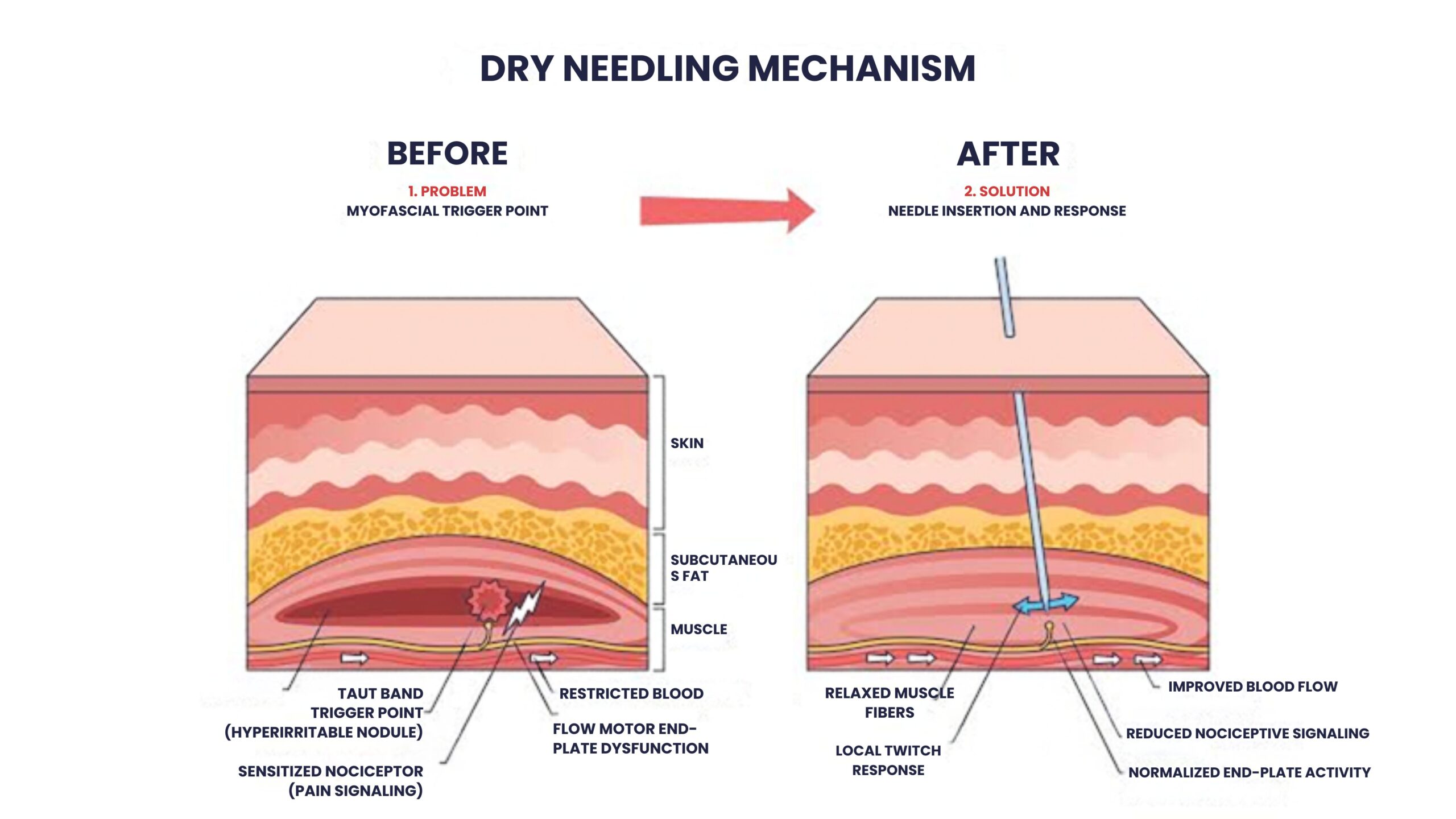
A dry needling needle is very thin. Your physiotherapist places it into a selected area of muscle or soft tissue. You may feel a small prick as the needle enters the skin. Some people may also feel a short twitch, pressure, or dull ache in the muscle.
Researchers continue to study how dry needling works. Changes in pain sensitivity and muscle activity may play a role. The exact response can differ from one person to another.
It is also important to know that dry needling does not simply remove a muscle knot. Pain can have many causes. A tight muscle may be one part of the problem, but it may not be the only cause. This is why your physiotherapist should assess your movement before choosing the treatment.
Dry Needling Is Not an Injection
Dry needling and injections use needles, but they are not the same treatment. An injection puts medicine into the body. Dry needling uses a thin needle without injecting medicine.
The purpose is also different. A doctor may use an injection for a medical reason and choose a specific medicine. A physiotherapist may use dry needling as one part of rehabilitation for certain muscle and movement problems.
If you are unsure about the treatment, ask your physiotherapist to explain what the needle will do and why they recommend it for you.
Dry Needling and Acupuncture Are Different
Dry needling and acupuncture both use thin needles. This often causes confusion. However, they use different treatment systems and approaches.
Dry needling in physiotherapy usually starts with a physical assessment. Your physiotherapist checks your pain, movement, muscle function, and daily activities. The therapist then chooses the treatment based on these findings.
If you are considering dry needling, make sure you receive treatment from a properly trained professional who can assess your condition and explain the procedure clearly.
What Problems May Dry Needling Help?
Dry needling may form part of physiotherapy for some muscle and movement problems. These can include certain cases of neck pain, shoulder pain, back pain, muscle tightness, sports injuries, and muscle pain.
It does not treat every type of pain. For example, knee pain can have many causes. Some people may need exercise and strength training. Others may need a doctor to check the knee first, especially after a major injury.
Your physiotherapist should first understand your problem. This helps the therapist decide if dry needling can play a useful role in your treatment.
Dry Needling for Neck Pain
Neck pain can make simple movements difficult. You may have trouble turning your head while driving. You may feel tightness around your neck and shoulders. Yourself may also feel uncomfortable after working at a computer for many hours.
Your physiotherapist will check your neck and upper-back movement. The therapist may also check your shoulders, posture, muscle strength, and daily work habits.
If muscle pain or tightness forms part of your problem, dry needling may form one part of your treatment. Your therapist may then give you simple neck and upper-back exercises. You may also receive advice about your desk setup and movement breaks.
For example, standing up and walking for a few minutes during a long workday can help you avoid staying in one position for too long.
Dry Needling for Shoulder Pain
Shoulder pain can affect many normal activities. You may find it hard to reach a shelf, lift an object, put on a shirt, or raise your arm.
Your physiotherapist will check how your shoulder moves. The therapist may also look at your neck, upper back, and shoulder blade because these areas work together.
If selected muscles feel painful or tight, dry needling may form part of your treatment. Your physiotherapist may then guide you through shoulder movements and strength exercises.
For example, you may start with gentle movements. As your shoulder becomes stronger, you may progress to resistance exercises. The aim is to help you use your shoulder better during normal daily tasks.
Dry Needling for Back Pain
Back pain can affect sitting, standing, walking, bending, and sleeping. Some people also notice tight muscles around the lower back or hips.
Your physiotherapist will ask when the pain started and what activities make it worse or better. The therapist will also check your back and nearby movements.
If muscle tightness forms part of your problem, dry needling may form part of your treatment. Your plan may also include back and hip exercises, mobility work, strength training, and advice about your daily routine.
For example, if your back becomes stiff after sitting for several hours, your therapist may teach you simple movements that you can perform during your workday. These small movement breaks can help you stay active.
Dry Needling for Muscle Pain
Muscle pain can happen after exercise, sports, repeated work, a sudden movement, or an injury. The muscle may feel sore, tight, or sensitive.
Your physiotherapist first checks the painful area. The therapist may also check the nearby joints and your movement pattern.
If dry needling suits your condition, the therapist may use it on selected muscle areas. After treatment, you may perform gentle movements or exercises.
Your physiotherapist may also explain how to manage your activity. The aim is to help you return to normal movement while also addressing factors that may have caused the problem.
Dry Needling for Sports Injuries
Sports can place high demands on muscles and joints. Running, jumping, lifting, throwing, landing, and quick changes in direction can all stress the body.
A sports injury may cause pain, stiffness, weakness, or reduced movement. These problems can affect your performance and daily activities.
Dry needling may form part of sports injury rehabilitation when muscle pain or tightness affects movement. Your physiotherapist may also use strength training, mobility exercises, balance work, and a gradual return to sports.
For example, a football player may need to regain strength before returning to running. Later, the player may need exercises for jumping, landing, slowing down, and changing direction. Dry needling alone cannot prepare the body for these demands. Progressive exercise remains an important part of sports rehabilitation.
Dry Needling for Muscle Tightness
Muscle tightness can happen after exercise, long periods of sitting, repeated work, reduced activity, or an injury. You may feel tightness in your neck, shoulders, back, hips, thighs, or calves.
Your physiotherapist will try to understand why the muscle feels tight. Weakness, reduced movement, a change in activity, or an injury may contribute to the problem.
If dry needling suits your condition, your therapist may use it as one part of treatment. You may then work on stretching, mobility, and strength.
This wider approach matters. The goal is not just to make a muscle feel relaxed for a short time. You also need to improve how you move and use the muscle during daily activities.
Dry Needling and Exercise Therapy
Exercise is an important part of many physiotherapy plans. Dry needling may help some people move a painful or tight area more comfortably, but exercise helps build strength and movement control.
For example, a person with shoulder pain may receive dry needling for selected muscles and then perform shoulder exercises. A person with leg pain may work on mobility and strength after treatment.
Your physiotherapist can start with simple exercises and increase the difficulty as your movement improves.
This gradual approach gives your body time to adjust. It also helps you return to your normal activities in a controlled way.
Dry Needling and Manual Therapy
Your physiotherapist may combine dry needling with manual therapy when both methods suit your condition.
Manual therapy uses hands-on techniques to work with joints, muscles, and soft tissues. Dry needling uses a thin needle to target selected areas.
For example, someone with shoulder stiffness may receive manual therapy to support shoulder movement, dry needling for selected muscle tightness, and exercises to improve strength.
You do not always need all these treatments. Your physiotherapist should choose the methods that match your condition and goals.
What Happens During a Dry Needling Session?
Your first session usually starts with an assessment. Your physiotherapist will ask about your pain, injury history, health conditions, medicines, previous treatment, and daily activities.
The therapist will then check your movement and physical function. The therapist may also examine the muscles around the painful area.
If dry needling looks suitable, your physiotherapist will explain the treatment before starting. You can ask questions about the needle, the treatment area, what you may feel, and what may happen after the session.
The therapist uses a new, sterile needle for treatment. After the procedure, your physiotherapist may guide you through gentle movements or exercises.
The therapist can also explain what you may feel later and when you should contact them if something does not feel right.
Does Dry Needling Hurt?
You may feel a small prick when the needle enters your skin. You may also feel a short twitch, pressure, or dull ache in the muscle.
Everyone responds differently. Some people find the treatment easier than they expected. Others may feel nervous because they do not like needles.
Tell your physiotherapist if you feel anxious. The therapist can explain each step and answer your questions before starting.
If you feel strong or unusual pain during treatment, tell your physiotherapist at once. The therapist can stop or change the treatment.
What Can You Feel After Dry Needling?
Some people feel mild soreness after dry needling. The treated area may feel similar to a muscle that you have worked during exercise.
Your physiotherapist can explain what you may expect after your session. The therapist may also give you simple advice about movement and activity.
Some people notice a change in pain or movement after treatment. Others may notice little change after one session. Your response depends on the problem and many other factors.
One treatment session does not tell the whole story. Your physiotherapist can look at your progress over time and decide what treatment you need next.
Is Dry Needling Safe?
Dry needling can be safe when a trained professional uses sterile equipment and follows proper safety steps. However, like other treatments, it can have some risks.
You may notice mild soreness, a small amount of bleeding, or a small bruise where the needle entered the skin.
Serious problems are uncommon, but the risk can depend on the area treated and your health. Your physiotherapist should therefore take a proper health history before treatment.
Tell your therapist about your medicines, medical conditions, recent surgery, and any other health concerns before dry needling.
Who Needs Extra Care With Dry Needling?
Some people need extra care before receiving dry needling. Tell your physiotherapist if you take blood-thinning medicine, have a bleeding problem, have an infection near the treatment area, have recently had surgery, are pregnant, or have another health condition that may affect treatment.
You should also tell the therapist if you have a strong fear of needles.
Your physiotherapist can then decide if dry needling is suitable. If it does not suit you, the therapist can suggest other treatment options.
Never hide important medical information just because you want a particular treatment.
Dry Needling During Pregnancy
Pregnancy requires extra care with some treatments. If you are pregnant, tell your physiotherapist before the session.
Your physiotherapist can consider your stage of pregnancy, symptoms, health history, and medical advice. The therapist may decide to avoid certain areas or use another treatment method.
If your doctor has given you special instructions during pregnancy, share them with your physiotherapist.
Dry Needling at Home in Delhi NCR
Home physiotherapy can make treatment easier for people who find travel difficult. Pain, injury, surgery, weakness, or reduced movement can make travelling uncomfortable.
With Dry Needling at home in Delhi NCR, a trained physiotherapist can visit your home and first check whether the treatment suits your condition and home setting.
The therapist can also connect your treatment with your daily life. For example, the therapist can look at how you sit, walk, use stairs, exercise, or move around your home.
If dry needling forms part of your treatment, your physiotherapist can also guide you through suitable exercises after the session.
Dry Needling for Office Workers
Office workers often sit for many hours. Staying in one position for a long time can make the neck, shoulders, and back feel stiff.
Your physiotherapist can check your sitting habits, movement, and muscle strength. If muscle tightness forms part of your problem, dry needling may form one part of your treatment.
But treatment should not stop there. Your physiotherapist may also teach you simple exercises and movement breaks.
You can stand up, walk for a few minutes, change your sitting position, and move your neck and shoulders during the day. These simple habits can support your overall treatment.
Dry Needling for Gym and Fitness Injuries
Gym exercise can improve strength and fitness, but a sudden increase in training can put extra stress on muscles.
You may develop pain after lifting heavier weights, increasing your workout time, or adding a new exercise.
Your physiotherapist can assess the problem before choosing treatment. Dry needling may help selected muscle problems, but your plan may also include mobility work, strength training, and a gradual return to exercise.
Do not use dry needling as a way to keep training through an injury. Your body still needs time and the right exercises to recover.
Dry Needling for Older Adults
Older adults may experience muscle stiffness, weakness, joint problems, or movement difficulties. Some people may also find it difficult to travel to a clinic.
A physiotherapist can check whether dry needling suits the person’s health and needs. If it does not, the therapist can use other treatment methods.
Home physiotherapy may also include walking practice, balance exercises, strength work, and simple movement training.
The treatment should always match the person’s ability and medical needs.
How Many Dry Needling Sessions Do You Need?
There is no fixed number of dry needling sessions for everyone. The number depends on your symptoms, condition, goals, and response to treatment.
Some people may use dry needling for a short period as part of a wider rehabilitation plan. Others may not need dry needling at every visit.
Your physiotherapist should review your progress and decide if dry needling still has a useful role in your care.
The main goal should always be better movement and better function, not simply more treatment sessions.
Can Dry Needling Replace Physiotherapy?
No. Dry needling is one technique used within physiotherapy. It is not a complete rehabilitation program.
Many movement problems also need exercise, strength training, mobility work, balance training, activity advice, and education.
For example, if dry needling helps a tight leg muscle feel more comfortable, you may still need exercises to build strength. If you have a sports injury, you may also need running and sports exercises before you return to competition.
Your physiotherapist can decide how dry needling fits into your full treatment plan.
What Should You Do After Dry Needling?
Your physiotherapist will give you advice based on your treatment and condition. In many cases, you can continue normal light activity unless your therapist tells you to change your routine.
Follow your exercise plan and avoid suddenly increasing your training load.
If your therapist gives you certain exercises, follow the recommended level. Do not add hard exercises simply because the treated area feels better.
Contact your physiotherapist if you develop symptoms that concern you.
When Should You Seek Medical Help?
Some symptoms need medical attention rather than physiotherapy alone. Seek urgent medical help if you develop severe or sudden pain, trouble breathing, chest pain, fainting, sudden weakness, or another serious symptom.
If you have a concerning reaction after dry needling, contact a medical professional.
You should also follow your doctor’s advice if you have a medical condition that needs regular care.
Dry needling can form part of physiotherapy, but it does not replace medical care when you have a serious or unexplained problem.
Why Choose HealFast for Dry Needling?
At HealFast Physiotherapy, we use an assessment-first approach. We do not recommend dry needling simply because you have pain. Your physiotherapist first checks your symptoms, movement, muscle function, medical history, and daily needs.
If dry needling suits your condition, the therapist can include it in a wider treatment plan. This plan may include exercise, mobility work, manual therapy, stretching, strength training, balance work, and advice for your daily routine.
Our home physiotherapy service can also make treatment more convenient. You can receive care at home without travelling to a clinic. Your physiotherapist can also connect your treatment with the movements you perform every day.
The goal is simple: help you move better, improve physical function, and return to your normal activities in a safe and gradual way.
Frequently Asked Questions About Dry Needling
What is dry needling in physiotherapy?
Dry needling is a physiotherapy technique that uses a thin, sterile needle to target selected muscles or soft tissue areas. It may form part of treatment for some muscle and movement problems.
Is dry needling the same as an injection?
No. Dry needling does not inject medicine. It uses a thin needle to target selected areas of muscle or soft tissue.
Is dry needling the same as acupuncture?
No. Both use thin needles, but they use different treatment approaches. Dry needling in physiotherapy uses a physical assessment of pain, movement, muscle function, and activity.
Can dry needling help back pain?
Dry needling may help some people with muscle-related back pain. Your physiotherapist should assess your back and movement before deciding if it suits you.
Can dry needling help neck pain?
It may help some people with neck pain and muscle tightness. Your treatment may also include neck exercises, upper-back exercises, and movement advice.
Can dry needling help shoulder pain?
Dry needling may form part of treatment for selected shoulder problems. Your physiotherapist may also use shoulder mobility and strength exercises.
Can dry needling help sports injuries?
It may form part of rehabilitation for selected sports injuries, especially when muscle pain or tightness affects movement. Sports rehabilitation also needs progressive strength and movement training.
Can I get dry needling at home?
Yes. HealFast Physiotherapy provides dry needling at home in Delhi NCR when the treatment is suitable and can be provided safely in the home setting.
Does dry needling hurt?
You may feel a small prick, pressure, a short twitch, or a brief ache. Tell your physiotherapist if you feel strong or unusual pain.
What happens after dry needling?
You may feel mild soreness in the treated area. Your physiotherapist can explain what to expect and what activities or exercises you should follow after treatment.
How many dry needling sessions do I need?
There is no fixed number. Your physiotherapist will decide based on your symptoms, goals, progress, and response to treatment.
Can dry needling replace exercise?
No. Dry needling is one physiotherapy technique. Exercise may still be important for strength, mobility, balance, movement control, and long-term function.
Start Dry Needling Physiotherapy at Home in Delhi NCR
Muscle pain and tightness can affect your work, exercise, sleep, walking, and daily activities. Dry needling may help some people when muscle pain or tightness forms part of the problem. But your treatment should look at more than one symptom. A good physiotherapy plan may include dry needling, exercise, mobility work, strength training, manual therapy, and simple changes to your daily routine.
At HealFast Physiotherapy, your physiotherapist first checks your condition. If dry needling suits your needs, the therapist can use it as one part of your rehabilitation plan.
Book a Dry Needling physiotherapy assessment at home in Delhi NCR.
📞 Call: +91 84487 77406
🏠 Home Physiotherapy in Delhi NCR
Related Physiotherapy Services
Dry needling can form part of treatment for selected muscle, pain, and movement problems. Explore our related physiotherapy services for additional support based on your condition. Dry Needling at Home in Delhi NCR.
| Related Service | Description | CTA |
|---|---|---|
| Manual Therapy | Hands-on physiotherapy for selected pain, stiffness and movement problems. | Learn More → |
| Muscle Pain Treatment | Physiotherapy for muscle pain, tightness, weakness and movement problems. | Learn More → |
| Shoulder Pain Physiotherapy | Treatment support for shoulder pain, stiffness, weakness and limited movement. | Learn More → |
| Injury Rehabilitation | Structured rehabilitation to improve strength, movement and function after injury. | Learn More → |
| Pain Management Physiotherapy | Personalized physiotherapy for different types of pain and movement problems. | Learn More → |