Home Rehabilitation at Home in Delhi NCR
Home Rehabilitation at Home in Delhi NCR, Home rehabilitation helps people for example regain movement, strength, balance, walking ability, and confidence after an injury, surgery, illness, stroke, fracture, or long period of reduced activity. It can also support older adults who have become weaker, less active, or less steady during daily activities. The main aim is not simply to exercise. The aim is to help you use your body better and return to activities that matter in your daily life.
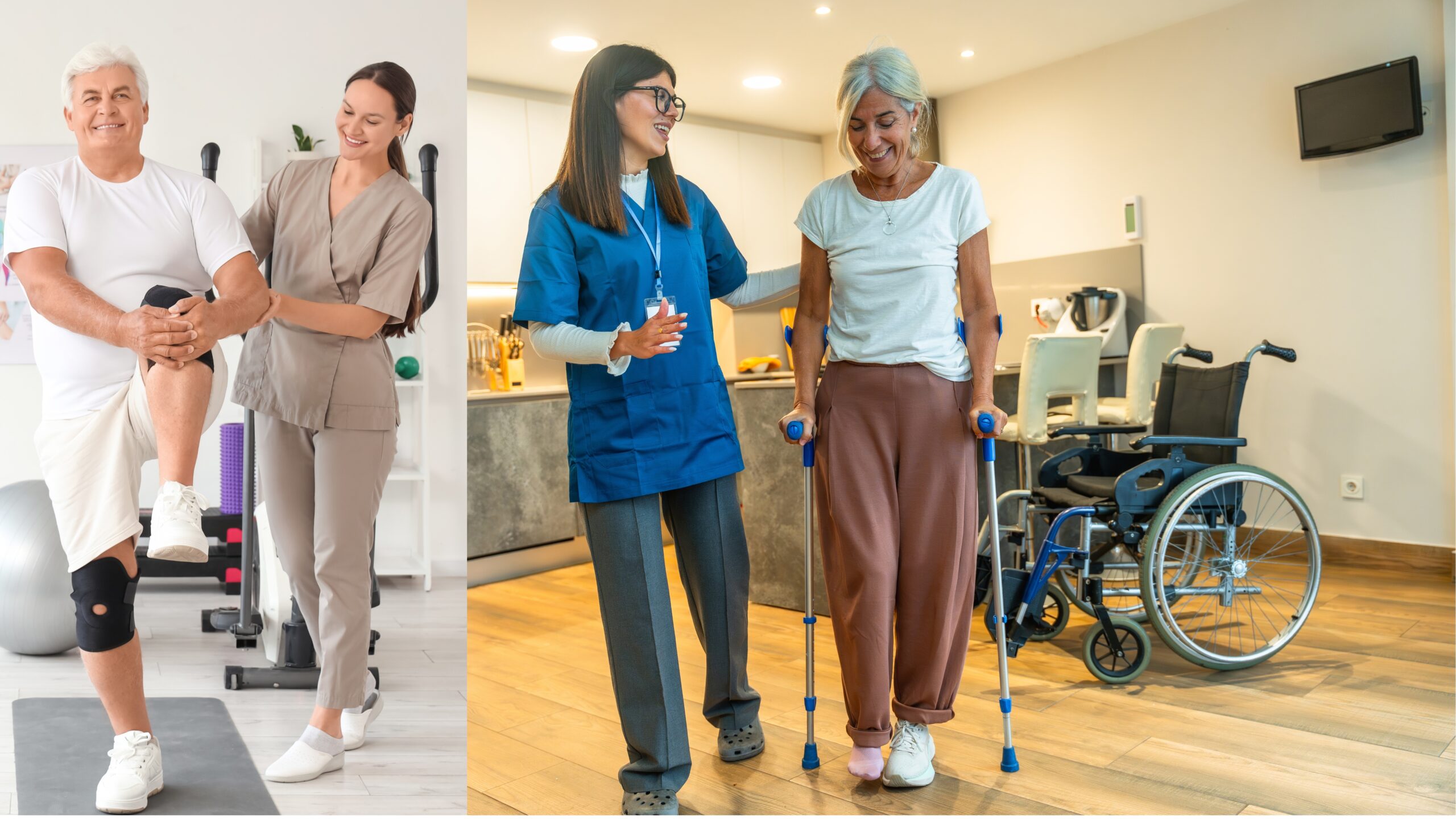
Home Rehabilitation at Home in Delhi NCR gives you access to personalised physiotherapy in a familiar environment. A physiotherapist can assess how you move, identify areas that need attention, and create a treatment plan around your condition and goals. Depending on your needs, such as treatment may include mobility exercises, strength training, balance exercises, walking practice, functional training, movement education, and other physiotherapy techniques.
For example, a person may have enough strength to stand but still struggle to get up from a low sofa. Another person may walk on a flat floor but feel unsteady while using stairs. Someone recovering from a stroke may find it difficult to turn, transfer from bed to chair, or walk safely between rooms. These problems need practical rehabilitation. Home treatment allows the physiotherapist to work on movements that you actually perform every day.
Understanding Home-Based Rehabilitation
Home rehabilitation is a structured recovery process that takes place in your home when the setting is suitable for treatment. The physiotherapist first learns about your condition, symptoms, medical history, previous treatment, daily routine, and rehabilitation goals. The therapist then checks important areas such as strength, joint movement, flexibility, balance, walking, coordination, and functional ability.
The treatment plan depends on what you need. A person recovering from knee replacement may need knee mobility, leg strength, walking practice, and stair training. For example a person recovering from an ankle injury may need ankle movement, calf strength, balance training, and gradual return to normal walking. A person recovering from a stroke may need such as sitting balance, standing practice, transfers, walking, and movement training for the affected side.
The home setting can add useful information to the assessment. A patient may move well during a simple exercise but struggle when getting out of bed or walking around furniture. The physiotherapist can observe these real-life movements and include them in the treatment plan.
Why Home Rehabilitation Can Support Better Daily Function
Recovery needs regular practice. One physiotherapy session cannot replace all the movement your body needs during the week. Your physiotherapist can teach suitable exercises and activities that you can practise between sessions.
Home rehabilitation also allows you to practise in the environment where you spend most of your time. This can make treatment more practical. For example, the therapist may help you practise standing from your own chair, walking to the bathroom, getting in and out of bed, using stairs, or reaching for objects on a shelf.
This approach also helps identify barriers inside the home. A loose rug, poor lighting, narrow walking space, slippery floor, or unsuitable chair may affect safe movement. The physiotherapist can point out these issues and suggest simple changes when appropriate.
Who May Benefit From Home Rehabilitation?
People may need rehabilitation when an injury, medical condition, surgery, or period of inactivity affects movement and daily function. The exact need varies from person to person.
Home rehabilitation may help people recovering from orthopedic surgery, joint replacement, fractures, sports injuries, stroke, neurological conditions, muscle weakness, balance problems, or long hospital stays. Older adults may also benefit when reduced strength or balance makes everyday activities more difficult.
Some people also need rehabilitation because they have lost confidence in their movement. Fear can make a person avoid walking, stairs, or other activities. A physiotherapist can introduce these movements gradually and help the person build skill and confidence at a suitable pace.
Recovery After Surgery
Surgery can change the way you move. Pain, swelling, stiffness, muscle weakness, and reduced activity can affect normal function. Some people also feel unsure when they first start using the operated body part.
Physiotherapy can support recovery after many procedures, including knee replacement, hip replacement, ACL reconstruction, shoulder surgery, and fracture surgery. The exact plan depends on the procedure and the instructions from the surgeon.
For example, after knee replacement, rehabilitation may include knee movement, leg strengthening, walking practice, chair transfers, and stair training. After shoulder surgery, the therapist may focus on safe movement and gradual strengthening when the surgeon allows it.
The physiotherapist must follow medical restrictions. Patients should not increase weight-bearing, resistance, or exercise intensity on their own when their surgeon has placed limits on movement.
Rehabilitation After an Injury
An injury can affect more than the injured area. A painful knee can change your walking pattern. An ankle injury can reduce balance. A shoulder injury can make dressing, reaching, lifting, and carrying difficult.
A physiotherapist looks at these changes as part of the recovery process. Treatment may include mobility exercises, strengthening, balance training, movement practice, and functional activities.
Consider an ankle sprain. Early rehabilitation may focus on comfortable movement and safe weight-bearing. As the person improves, the therapist may add calf strengthening, balance exercises, walking practice, and more challenging movements. The therapist can increase the difficulty as the body becomes ready.
Supporting Recovery After a Stroke
A stroke can affect strength, balance, coordination, walking, and the use of an arm or hand. Some people may also have difficulty with transfers or everyday movements.
Stroke rehabilitation often uses repeated and meaningful practice. A physiotherapist may work on rolling in bed, sitting, standing, transferring between surfaces, walking, weight shifting, and balance.
Home sessions can make this training more relevant to daily life. The therapist may practise getting out of bed, walking between rooms, turning near furniture, sitting on a chair, or using stairs when appropriate.
Stroke recovery differs greatly between people. The rehabilitation plan should match the person’s medical condition, current abilities, and treatment goals.
Rehabilitation for Paralysis and Severe Weakness
Paralysis can affect strength, movement, balance, coordination, and independence. The effects depend on the cause and the area of the body involved.
Physiotherapy may focus on maintaining joint movement, improving available muscle strength, practising transfers, developing balance, and working on useful functional movements. Some people may also need walking training or training with a suitable mobility aid.
Caregivers can also become part of the rehabilitation process. When appropriate, the physiotherapist can teach family members how to support movement safely. This can help caregivers avoid pulling, lifting, or moving the patient in ways that may cause unnecessary strain.
The goals can differ for each person. One patient may focus on walking. Another may focus on moving safely from bed to chair. Someone else may work toward better arm movement or greater independence during daily tasks.
Improving Strength for Everyday Activities
Muscle strength supports many activities that we often take for granted. Standing, walking, climbing stairs, lifting, carrying, and getting out of bed all require strength.
A physiotherapist can identify movements that cause difficulty and choose exercises that match your current ability. Training may begin with simple body-weight exercises. The therapist may later add resistance bands, weights, or other equipment.
Progress should happen gradually. Doing too much too soon can increase soreness, fatigue, or discomfort. A planned approach allows your body to adapt while you build useful physical strength.
Improving Balance and Movement Control
Balance helps you stay steady while standing and moving. It also helps when you turn, reach, step over an object, or change direction.
Balance problems can develop after an injury, surgery, stroke, neurological condition, illness, or long period of inactivity. Training may include weight shifting, reaching, stepping, standing, turning, and controlled walking.
The therapist adjusts the difficulty based on your ability. A person with a high fall risk should not begin challenging balance exercises alone. Professional assessment can help identify a safe starting level.
Improving Walking Ability
Walking requires several systems to work together. Your joints need enough movement, Your muscles need enough strength, Such as Your nervous system needs to control movement. Your balance system needs to keep you stable as your weight moves from one leg to the other.
A physiotherapist can assess your walking pattern and identify areas that need attention. Treatment may include leg strengthening, balance exercises, weight shifting, walking practice, turning, changes in direction, and training with a suitable walking aid.
The therapist can also practise everyday walking situations. These may include starting and stopping, walking around furniture, changing direction, and using stairs when appropriate.
Turning Exercise Into Useful Movement
Functional rehabilitation connects exercise with real-life activities. Instead of training only one muscle or one joint, the therapist can combine several skills during a useful task.
For example, a patient may practise standing from a chair after working on leg strength. Someone recovering from surgery may practise stepping onto a stair after improving balance and lower-body control. A person recovering from a stroke may practise moving from the bed to a chair.
These activities require several skills at the same time. Strength, balance, coordination, joint movement, attention, and confidence all play a role.
This makes functional training an important part of a complete rehabilitation program.
Mobility and Joint Flexibility
Good mobility allows your joints to move through the range needed for everyday tasks. Stiffness can make walking, dressing, reaching, bending, and getting out of a chair harder.
Joint stiffness may occur after surgery, injury, arthritis, prolonged rest, or reduced activity. A physiotherapist may use gentle mobility exercises, active movement, stretching when appropriate, strengthening, and functional activities.
The therapist does not need to force a stiff joint. Controlled movement and gradual progression can provide a safer starting point. The plan should match the cause of the stiffness and the person’s tolerance.
Managing Pain During Recovery
Pain can change how you move. A person with knee pain may put more weight on the other leg. Someone with back pain may avoid bending. A person with shoulder pain may stop using the affected arm.
These changes can lead to less activity, weakness, stiffness, and fear of movement. Physiotherapy can address these movement problems while considering the cause and nature of the pain.
Treatment may include exercise, mobility work, education, manual techniques, and gradual return to activity. The exact approach depends on the person’s condition.
Severe, sudden, unexplained, or unusual pain may need medical assessment before you start or change a rehabilitation program.
What Happens During the First Session?
The first session usually begins with an assessment. The physiotherapist asks about your condition, symptoms, medical history, previous treatment, daily activities, and goals.
The therapist may assess strength, joint movement, flexibility, balance, walking, coordination, posture, and functional movement. The therapist may also look at the home environment when it affects safety or daily activities.
After the assessment, the physiotherapist explains the treatment plan. If suitable, you may learn exercises during the first session.
The therapist can also explain how to practise the exercises and what changes you should watch for during recovery.
How Your Rehabilitation Plan Progresses
Rehabilitation changes as your ability improves. Early sessions may focus on basic movement, safe activity, pain management, or joint mobility. Later sessions may include more challenging strength exercises, balance work, walking practice, and functional tasks.
The physiotherapist may increase repetitions, resistance, walking distance, movement difficulty, or task complexity. The therapist also checks how your body responds to the change.
Recovery does not follow one fixed timeline. Your condition, age, surgery, injury severity, activity level, sleep, nutrition, and general health can all affect your progress.
How Often Should You Practise?
Some exercises may become part of your daily routine. Other exercises may need rest between sessions. Your physiotherapist can explain which activities you can practise regularly and which movements need recovery time.
Doing more exercise does not always mean faster progress. The right amount depends on your condition and how your body responds.
If an exercise causes unusual pain, dizziness, major swelling, sudden weakness, or another concerning symptom, stop the activity and contact your healthcare professional.
Keeping Your Home Environment Safe
A safe environment can support rehabilitation. Loose rugs, clutter, poor lighting, slippery floors, and unsuitable furniture can increase the risk of falls.
Your physiotherapist may identify these risks during a home session. Simple changes can sometimes make movement easier and safer.
For example, keeping a clear walking path can help someone who uses a walker. Better lighting can make night-time movement easier. A stable chair with suitable height may make sit-to-stand practice safer.
When Should You Speak With a Doctor?
Physiotherapy can support many movement and recovery problems, but some symptoms need medical attention.
Seek urgent medical help for sudden severe pain, chest pain, difficulty breathing, sudden weakness or numbness, new speech or vision problems, loss of bladder or bowel control, a serious fall, suspected fracture, high fever with severe symptoms, or rapidly increasing swelling.
After surgery, always follow your surgeon’s instructions about wound care, weight-bearing, movement restrictions, and warning signs.
Why Choose HealFast for Home Rehabilitation at Home in Delhi NCR?
HealFast provides Home Rehabilitation at Home in Delhi NCR for people who need personalised support with movement and recovery. The physiotherapist assesses your condition and creates a plan around your current ability, home environment, and daily goals.
Depending on your needs, treatment may include mobility exercises, strength training, balance training, gait training, functional rehabilitation, movement education, and other suitable physiotherapy techniques.
The focus stays on useful movement. Instead of working only on isolated exercises, the therapist can help you practise movements that matter in your daily routine, such as standing, walking, turning, using stairs, getting out of bed, and moving safely around your home.
Start Your Recovery With Home Rehabilitation at Home in Delhi NCR
Recovery can take time. Regular practice, suitable exercise, good guidance, and realistic goals can all support the rehabilitation process.
If surgery, injury, illness, stroke, weakness, or reduced mobility has made everyday movement difficult, a personalised physiotherapy assessment can help identify the areas that need attention.
HealFast provides home physiotherapy in selected areas of Delhi NCR, subject to service availability.
Book your Home Rehabilitation Physiotherapy session today 📞 +91 84487 77406
Frequently Asked Questions
What is home rehabilitation?
Home rehabilitation is a structured physiotherapy program provided in a person’s home. It can include mobility exercises, strengthening, balance training, walking practice, functional training, and education.
Who can benefit from home rehabilitation?
People recovering from surgery, injury, stroke, illness, neurological conditions, weakness, balance problems, or prolonged inactivity may benefit.
Can physiotherapy help after surgery?
Yes. Physiotherapy can support movement, strength, balance, walking, and daily function after many types of surgery. The treatment plan should follow the surgeon’s instructions.
Can I receive stroke rehabilitation at home?
Yes, when home treatment is suitable. A physiotherapist may work on walking, balance, transfers, strength, coordination, and functional movement.
Can physiotherapy help walking problems?
Yes. A physiotherapist can assess your walking pattern and work on strength, balance, coordination, weight shifting, movement control, and walking practice.
Can older adults receive home rehabilitation?
Yes. Older adults can receive physiotherapy for weakness, stiffness, balance problems, walking difficulties, and reduced physical activity.
How long does home rehabilitation take?
Recovery time varies. Your condition, severity, medical history, age, activity level, and response to treatment can all affect progress.
Can family members participate?
Yes. When appropriate, the physiotherapist can teach family members how to support exercises, transfers, walking, and daily activities safely.
Can home rehabilitation help after a hospital stay?
Yes. A long hospital stay can lead to weakness, stiffness, reduced balance, and lower activity levels. Physiotherapy can help rebuild these abilities according to the person’s medical condition.
Is home rehabilitation safe?
It can be safe when a qualified physiotherapist assesses the patient and selects suitable activities. The therapist should also consider medical restrictions and home safety.
What should I wear during a home physiotherapy session?
Wear comfortable clothing that allows easy movement. Loose track pants, shorts, or comfortable sports clothing can make assessment and exercise easier.
Related Physiotherapy Services
Home rehabilitation often works best as part of a wider physiotherapy plan. Depending on your condition and recovery goals, your physiotherapist may include walking practice, balance training, mobility work, functional exercises, or condition-specific rehabilitation. Explore these related services to understand how each area can support your recovery.
| Stroke Rehabilitation | Stroke Rehabilitation Physiotherapy | View Service |
| Functional Rehabilitation | Functional Rehabilitation Physiotherapy | View Service |
| Gait Training | Gait Training Physiotherapy | View Service |
| Balance & Coordination Training | Balance & Coordination Training | View Service |
| Mobility & Movement Therapy | Mobility & Movement Therapy | View Service |