Muscle Pain Treatment at Home in Delhi NCR
Personalized Physiotherapy for Muscle Pain, Stiffness, Strain & Movement Problems. Muscle pain can make simple everyday activities uncomfortable. Walking, climbing stairs, sitting for long hours, working at a desk, exercising, sleeping or even getting out of bed may become difficult when muscles are painful, tight or weak. At HealFast Physiotherapy, we provide personalized muscle pain treatment at home in Delhi NCR, designed around your symptoms, movement limitations, activity level and rehabilitation goals. Our physiotherapy approach focuses on understanding why the muscle is painful, identifying movement or strength problems that may be contributing to the symptoms, and developing a progressive rehabilitation plan. Depending on your condition, physiotherapy may include therapeutic exercises, mobility exercises, stretching, strengthening, manual therapy, movement retraining and home exercises.
Book a Home Physiotherapy Assessment
📞 Call: +91 84487 77406 | WHATSAPP A PHYSIOTHERAPIST
Why Does Muscle Pain Happen?
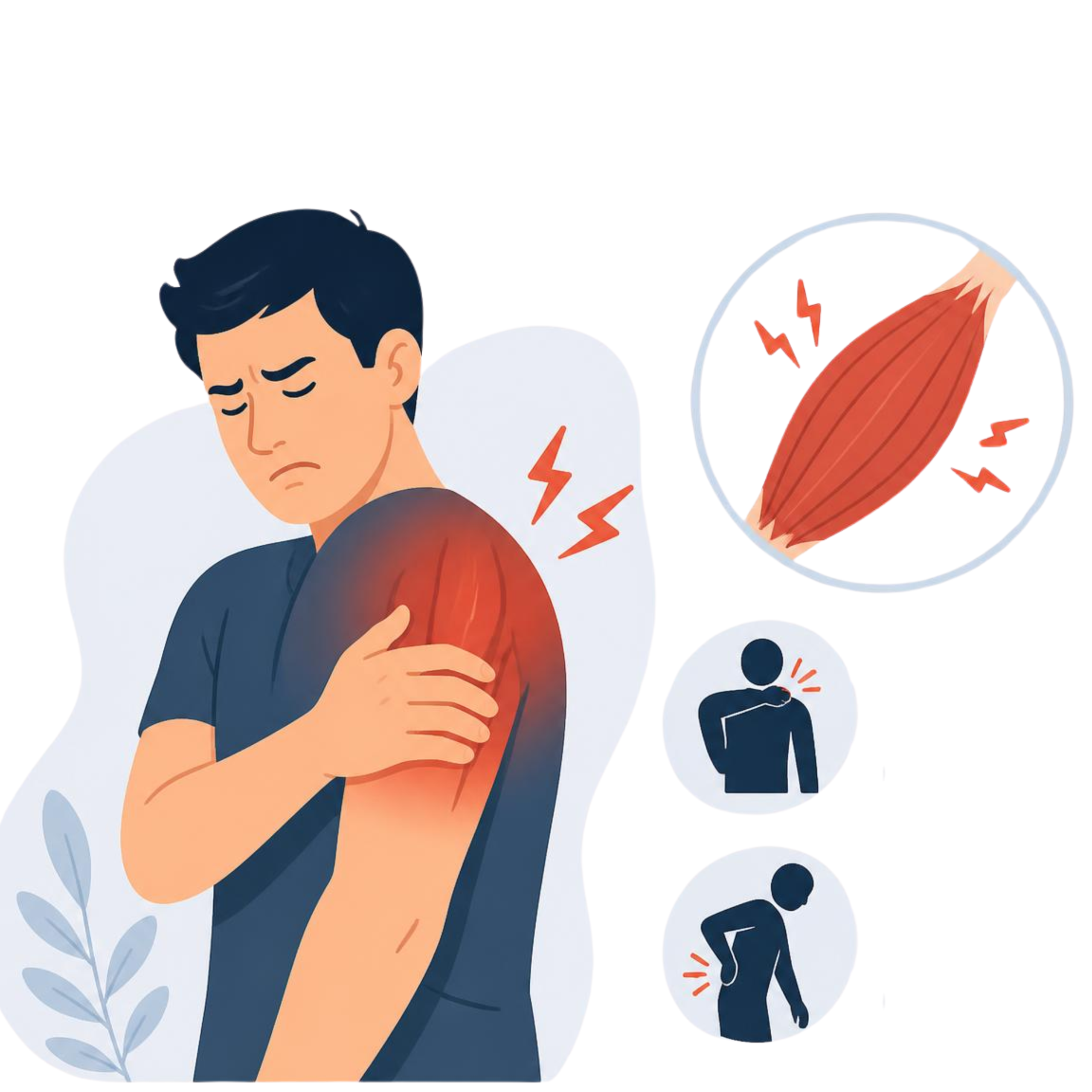
Muscle pain can have many different causes. Sometimes it develops after physical activity or exercise. In other situations, it may gradually develop because of prolonged sitting, repetitive movements, poor movement patterns, muscle weakness or previous injuries.
Common factors associated with muscle pain include:
- Muscle strain
- Overuse of muscles
- Sudden increase in physical activity
- Sports injuries
- Poor posture
- Prolonged sitting
- Repetitive work
- Muscle weakness
- Reduced flexibility
- Lack of physical activity
- Previous injury
- Improper exercise technique
- Sudden twisting or lifting
- Work-related physical stress
- Recovery after surgery or injury
The underlying cause matters because the appropriate treatment approach can differ from person to person.
What Does Muscle Pain Feel Like?
Muscle pain does not always feel the same. Some people experience a dull or aching sensation, while others may experience tightness, tenderness or discomfort during movement. Common symptoms may include:
1. Muscle Ache
A persistent or intermittent aching sensation may develop in a specific muscle or surrounding area.
2. Muscle Tightness
The affected area may feel tight, particularly after sitting, sleeping or remaining in one position for a long time.
3. Tenderness
The muscle may feel sensitive when touched or when certain movements are performed.
4. Pain During Movement
Certain movements may increase discomfort, such as bending, reaching, walking, lifting or exercising.
5. Reduced Flexibility
Tight or painful muscles can make normal movements more difficult.
6. Muscle Weakness
After an injury or prolonged period of reduced activity, muscles may become weaker.
7. Reduced Activity
Pain may cause people to avoid activities they normally perform.
8. Difficulty With Daily Activities
Depending on the location of the pain, everyday activities such as walking, climbing stairs, lifting objects or working at a desk may become uncomfortable.
Common Areas Where Muscle Pain Occurs
Muscle pain can affect almost any part of the body.
Back Muscle Pain
Back muscles can become painful because of prolonged sitting, lifting, repetitive movements, reduced strength or previous injury.
Physiotherapy may focus on:
- Back mobility
- Core strengthening
- Postural awareness
- Hip mobility
- Functional movement
- Gradual strengthening
Neck Muscle Pain
Neck and upper shoulder muscles may become tight or painful, particularly with prolonged desk work or sustained positions.
Physiotherapy may include:
- Neck mobility exercises
- Shoulder movement exercises
- Postural education
- Strengthening
- Movement retraining
- Home exercises
Shoulder Muscle Pain
Shoulder discomfort may involve the muscles around the shoulder and upper back.
Treatment may focus on:
- Shoulder mobility
- Rotator cuff strengthening
- Scapular control
- Postural exercises
- Functional strengthening
Leg Muscle Pain
Leg muscle pain may develop after exercise, sports activity, prolonged walking, repetitive activity or injury.
Physiotherapy may include:
- Flexibility exercises
- Progressive strengthening
- Movement training
- Balance exercises
- Functional rehabilitation
Thigh Muscle Pain
Thigh pain can occur after sports activities, sudden movements, overuse or muscle strain.
Rehabilitation may involve gradual restoration of:
- Strength
- Flexibility
- Muscle control
- Walking ability
- Activity tolerance
Calf Muscle Pain
Calf discomfort can occur following exercise, increased walking, running or injury.
Because calf pain can occasionally have causes that require medical assessment, persistent, severe or unusual calf symptoms should be evaluated appropriately rather than assuming that they are simply muscular.
Muscle Pain vs Muscle Strain
These terms are often used interchangeably, but they are not exactly the same.
Muscle pain is a broad description of discomfort involving muscles.
A muscle strain generally refers to an injury involving overstretching or tearing of muscle fibres.
A strain may occur after:
- Sudden acceleration
- Jumping
- Sprinting
- Lifting
- Sudden changes in direction
- Sports activity
- Forceful stretching
The severity and rehabilitation requirements can vary considerably.
A physiotherapist can assess movement, strength and functional limitations and determine whether physiotherapy-based rehabilitation is appropriate or whether further medical assessment is needed.
How Physiotherapy Helps With Muscle Pain
Physiotherapy does not simply focus on the painful area.
A good assessment also looks at how you move, which muscles are weak or overloaded, how joints are moving and which activities reproduce symptoms.
Depending on the condition, physiotherapy can help with:
Improving Mobility
Gentle and progressive movement can help restore comfortable movement when stiffness is limiting activity.
Building Muscle Strength
Weak muscles may have difficulty handling everyday or sporting demands. Progressive strengthening can help improve capacity.
Improving Flexibility
Appropriate mobility and stretching exercises may help address movement restrictions.
Improving Movement Control
Physiotherapy can help patients learn more efficient movement patterns for daily activities and exercise.
Supporting Injury Rehabilitation
After a muscle injury, progressive rehabilitation can help restore strength and function before returning to normal activities.
Improving Physical Function
The ultimate goal is often not simply reducing discomfort but helping the person return to meaningful activities.
Our Muscle Pain Treatment Approach
At HealFast, treatment can be structured around your individual condition rather than following the same routine for every patient.
Step 1: Initial Assessment
The physiotherapist discusses:
- Your symptoms
- When the pain started
- Possible injury or activity trigger
- Previous injuries
- Daily activities
- Work requirements
- Exercise routine
- Pain-producing movements
- Functional limitations
The therapist may also assess movement, strength, flexibility and functional tasks where appropriate.
Step 2: Identify Contributing Factors
Muscle pain can sometimes be influenced by more than one factor.
For example, someone with back muscle discomfort may also have:
- Reduced hip mobility
- Weak trunk muscles
- Poor movement habits
- Prolonged sitting
- Low activity levels
The rehabilitation plan should therefore address relevant contributing factors rather than focusing only on the location of discomfort.
Step 3: Personalized Treatment Plan
Your physiotherapist may create a plan based on:
- Your age
- Activity level
- Symptoms
- Physical capacity
- Work requirements
- Injury history
- Rehabilitation goals
The treatment intensity can be adjusted as your condition changes.
Step 4: Therapeutic Exercises
Exercises are often an important part of physiotherapy-based rehabilitation.
Depending on your condition, exercises may include:
- Mobility exercises
- Stretching
- Isometric exercises
- Progressive resistance exercises
- Core strengthening
- Functional exercises
- Balance training
- Movement-control exercises
The exercises should be selected according to the person’s condition and current physical capacity.
Step 5: Progressive Strengthening
Once symptoms and movement tolerance allow, strengthening can gradually become an important part of rehabilitation.
Progressive strengthening may help improve:
- Muscle capacity
- Functional tolerance
- Movement control
- Physical confidence
- Ability to return to activities
The goal is to progress appropriately rather than doing too much too quickly.
Step 6: Home Exercise Program
Your physiotherapist may provide exercises that can be performed between sessions.
A home exercise program can help maintain progress and make rehabilitation part of your normal routine.
The exercises should be performed according to the physiotherapist’s instructions, particularly when recovering from an injury.
Muscle Pain Treatment for Office Workers
Long periods of sitting can contribute to discomfort in areas such as the:
- Neck
- Upper back
- Lower back
- Shoulders
- Hips
Office workers may benefit from a combination of:
- Movement breaks
- Postural education
- Mobility exercises
- Strengthening
- Workstation adjustments
- Regular physical activity
Physiotherapy can help identify movement and physical-capacity factors that may be contributing to recurring discomfort.
Muscle Pain After Exercise or Gym
Muscle soreness after unfamiliar or intense exercise can occur, particularly after a change in training volume or intensity.
However, persistent or significant pain should not automatically be considered normal post-exercise soreness.
Physiotherapy assessment may be useful when pain:
- Continues to interfere with activity
- Keeps returning
- Develops after an injury
- Limits movement
- Is associated with weakness
- Prevents normal exercise
A rehabilitation plan can help gradually restore movement and strength while considering the demands of your exercise routine.
Muscle Pain After Sports Injury
Sports can place significant demands on muscles.
Muscle injuries can occur during:
- Running
- Football
- Cricket
- Badminton
- Tennis
- Gym training
- Cycling
- Sprinting
- Jumping
Sports rehabilitation may focus on progressively restoring:
Mobility → Strength → Control → Functional Movement → Sport-Specific Activity
Returning to sport should be based on appropriate recovery and functional readiness rather than simply waiting for pain to disappear.
Physiotherapy for Muscle Stiffness
Muscle stiffness may develop after:
- Long periods of inactivity
- Prolonged sitting
- Injury
- Reduced movement
- Surgery
- Increased physical activity
Treatment may include a combination of:
- Gentle mobility
- Stretching
- Strengthening
- Functional movement
- Activity modification
- Home exercises
The appropriate approach depends on the underlying reason for stiffness.
Muscle Pain and Weakness
Pain and weakness can sometimes occur together.
For example, after an injury, a person may reduce movement because of discomfort. Reduced activity can then contribute to loss of strength and confidence in movement.
A progressive rehabilitation program can help rebuild physical capacity while considering the person’s symptoms and functional goals.
Muscle Pain Treatment for Older Adults
Muscle strength and physical activity become particularly important with increasing age.
Older adults may experience:
- Reduced muscle strength
- Stiffness
- Reduced mobility
- Difficulty walking
- Reduced balance
- Difficulty getting up from a chair
- Reduced activity levels
Home physiotherapy can be convenient for older adults who find travelling to a clinic difficult.
Treatment may focus on:
- Safe mobility
- Strengthening
- Balance
- Walking
- Functional activities
- Fall-risk-related physical factors
- Confidence with movement
Muscle Pain Physiotherapy at Home in Delhi NCR
One of the advantages of home physiotherapy is that treatment takes place in your familiar environment.
A physiotherapist can work with you around your actual daily activities and available space.
Typical Home Session
1. Assessment
Understand your symptoms and movement limitations.
2. Treatment Planning
Create an individualized rehabilitation approach.
3. Physiotherapy Session
Perform appropriate therapeutic interventions and exercises.
4. Exercise Guidance
Learn exercises that may be performed between sessions.
5. Progress Monitoring
Adjust the rehabilitation plan according to your progress and tolerance.
Who Can Benefit From Muscle Pain Physiotherapy?
Physiotherapy may be appropriate for people experiencing muscle-related problems associated with:
- Muscle strain
- Sports injuries
- Exercise-related discomfort
- Muscle weakness
- Stiffness
- Reduced mobility
- Postural problems
- Repetitive activities
- Previous injuries
- Reduced physical activity
- Recovery after surgery
- Functional movement difficulties
However, not every type of muscle pain should be treated as a simple muscular problem. Proper assessment is important when symptoms are severe, persistent, unusual or associated with other concerning symptoms.
Benefits of Physiotherapy-Based Muscle Rehabilitation
Depending on the underlying condition and individual response, physiotherapy may help support:
- Better movement
- Improved muscle strength
- Improved flexibility
- Better physical capacity
- Improved functional movement
- Better exercise tolerance
- Return to daily activities
- Return to recreational activities
- Improved confidence with movement
- Better understanding of exercises and self-management
Results vary from person to person and depend on the underlying condition, consistency and other health factors.
Why Choose HealFast for Muscle Pain Treatment at Home?
Muscle Pain Treatment at Home in Delhi NCR, At HealFast Physiotherapy, the focus is on personalized rehabilitation rather than a one-size-fits-all approach.
Home-Based Physiotherapy
Get physiotherapy at home without needing to travel to a clinic. Muscle Pain Treatment at Home in Delhi NCR
Personalized Assessment
Your symptoms, movement and functional requirements are considered while planning treatment.
Exercise-Based Rehabilitation
Appropriate exercises can help improve strength, mobility and physical capacity.
Functional Approach
The focus can extend beyond pain to everyday activities and movement goals.
Convenient for Families
Home sessions can be particularly useful for older adults, people recovering from injury and individuals with mobility limitations.
Progress-Based Treatment
The rehabilitation plan can be adjusted according to your response and changing physical capacity.
Muscle Pain Treatment Across Delhi NCR
Muscle Pain Treatment at Home in Delhi NCR, HealFast provides home physiotherapy services across selected areas of Delhi NCR, subject to therapist availability.
Service areas may include:
- South Delhi
- Gurgaon / Gurugram
- Noida
- Ghaziabad
- Faridabad
- Other Delhi NCR locations
For availability in your specific area, contact HealFast.
📞 +91 84487 77406
When Should You See a Doctor Instead of Assuming It Is Muscle Pain?
Most everyday muscle discomfort does not necessarily indicate a serious condition, but certain symptoms require appropriate medical evaluation.
Seek prompt medical attention if muscle pain is:
- Severe or rapidly worsening
- Associated with significant swelling
- Associated with major trauma
- Accompanied by significant weakness
- Associated with numbness or neurological symptoms
- Accompanied by fever or feeling significantly unwell
- Associated with unexplained symptoms
- Preventing normal movement
- Not improving as expected
Important: Sudden or unexplained calf pain/swelling, particularly when associated with breathing difficulty or chest pain, requires urgent medical attention rather than routine physiotherapy assessment.
Frequently Asked Questions
1. Can physiotherapy help with muscle pain?
Physiotherapy can help manage many musculoskeletal conditions involving pain, stiffness, weakness and reduced movement. The appropriate treatment depends on the underlying cause.
2. Can I get muscle pain physiotherapy at home?
Yes. HealFast provides home physiotherapy services in selected areas of Delhi NCR, subject to therapist availability.
3. How long does muscle pain take to improve?
Recovery varies considerably. A minor episode may improve relatively quickly, while a significant muscle injury or recurring problem may require a longer rehabilitation period.
4. What exercises are used for muscle pain?
Exercises depend on the cause and location of the pain. They may include mobility, stretching, strengthening, isometric, balance and functional exercises.
5. Can physiotherapy help muscle strain?
Physiotherapy can be part of rehabilitation following an appropriate assessment of a muscle strain. Treatment usually progresses gradually according to symptoms and functional capacity.
6. Can muscle pain be caused by sitting for long hours?
Prolonged sitting and limited movement can contribute to discomfort and stiffness, particularly around the neck, shoulders and back. Other causes should also be considered if symptoms persist.
7. Is home physiotherapy suitable for elderly people?
Home physiotherapy can be convenient for older adults, particularly when travelling is difficult. Treatment can focus on mobility, strength, balance and functional activities.
8. Can I exercise when I have muscle pain?
It depends on the cause and severity of the pain. Continuing an activity that significantly increases symptoms may not be appropriate. A physiotherapist can help determine an appropriate level of activity.
9. Can muscle pain keep coming back?
Yes. Recurring symptoms can sometimes be associated with factors such as insufficient strength, workload, movement patterns, training errors or incomplete rehabilitation. Identifying contributing factors is important.
10. Do I need physiotherapy for every muscle pain problem?
Not necessarily. Some minor muscle discomfort may resolve with appropriate rest and gradual return to activity. Persistent, recurrent or function-limiting symptoms may benefit from professional assessment.
Book Muscle Pain Physiotherapy at Home
Don’t let recurring muscle pain unnecessarily limit your daily activities.
If muscle pain, stiffness, weakness or an injury is affecting your movement, a professional assessment can help identify appropriate rehabilitation options. Muscle Pain Treatment at Home in Delhi NCR
HealFast Physiotherapy
Personalized Physiotherapy at Home in Delhi NCR
📞 Call: +91 84487 77406
BOOK A HOME PHYSIOTHERAPY ASSESSMENT
WhatsApp Us Today